
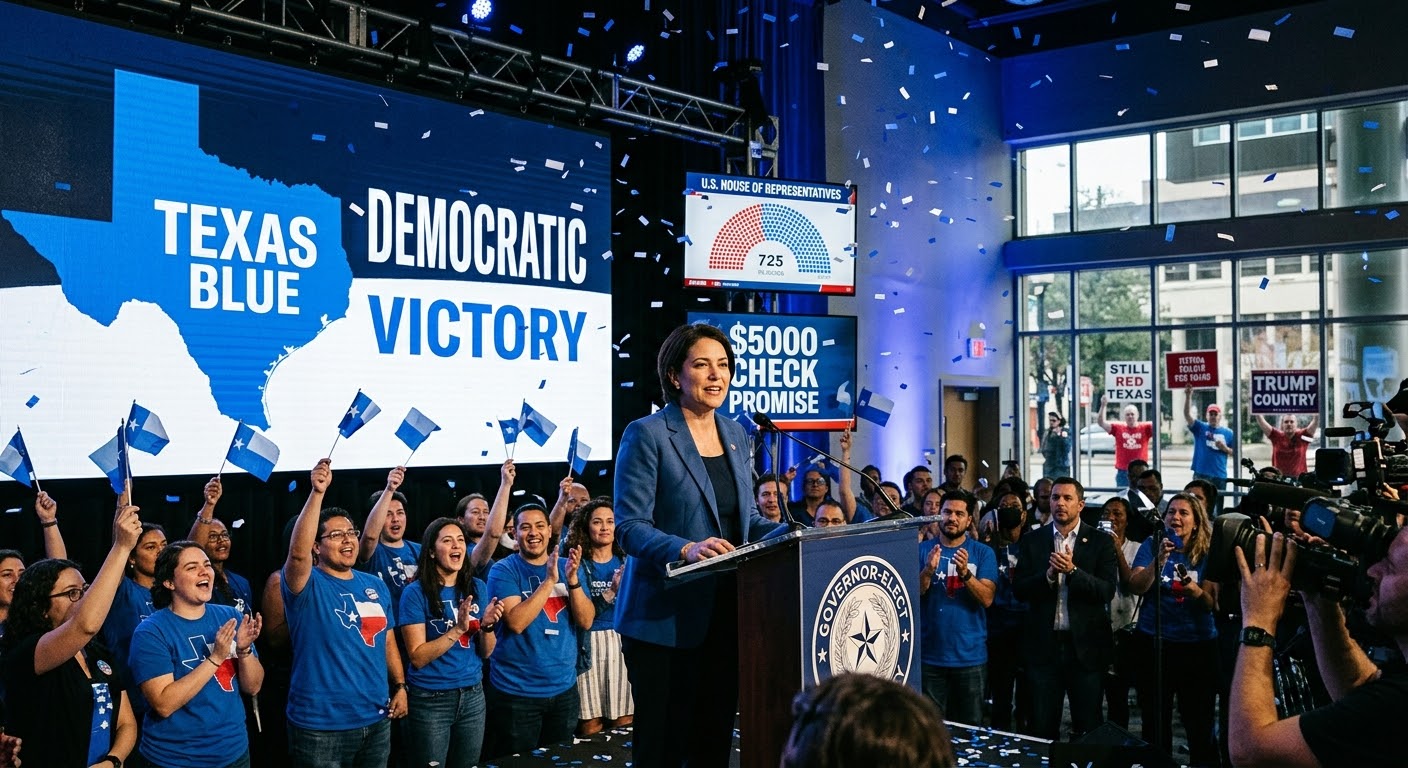
The political landscape underwent a seismic shift in the 2026 midterm elections, as Democrats broke three decades of solid Republican control by winning major statewide offices in Texas, including the governor’s office and a U.S. Senate seat.
The shifting dynamics in Texas, the delicate balance of power in Washington, and the paths available for both parties highlight a rapidly changing electoral landscape.
The Democratic Breakthrough in Texas
For the first time in thirty years, Democratic candidates captured the state’s top executive and federal positions. State Representative Gina Hinojosa unseated incumbent Governor Greg Abbott, while state Representative James Talarico defeated Ken Paxton in the U.S. Senate race.
Suburban Realignment: Flips in key Dallas–Fort Worth suburban counties, such as Collin County, provided major electoral gains for Democrats.
Border Rebound: Heavy turnout in South Texas border counties shifted back toward the Democratic column after GOP advances in prior cycles.
These outcomes mean the White House must navigate a divided landscape in Austin and a narrow, highly competitive legislative environment in Washington, forcing both parties into frequent negotiations over major policies.
The GOP’s Path Back in Texas and Congress
While Democrats gained key statewide seats, Texas remains highly competitive, and Republicans retain structural advantages across broad regions of the state. For the GOP to reclaim lost ground in Texas and shore up its national coalition, several key dynamics remain in play:
Delivering Direct Economic Relief: Heading into the midterms, President Donald Trump proposed a $5,000 “Trump Dividend” check for adult Americans, contingent on Republican support and legislative authorization. Passing targeted economic measures or stimulus legislation through Congress could serve as a major focal point for Republicans seeking to rally suburban and working-class voters.
Focusing on Core Economic and Security Issues: Restoring strong margins along the Texas border and in rapidly growing suburban corridors will require Republicans to lean heavily into local infrastructure, energy independence, border security, and tax policy.
Navigating National Polling: With the political environment in flux and presidential preference measures continuing to rank key battlegrounds as toss-ups, future outcomes in both Texas and the U.S. House will depend on which party more effectively addresses housing costs, inflation, and household budgets.
 English