
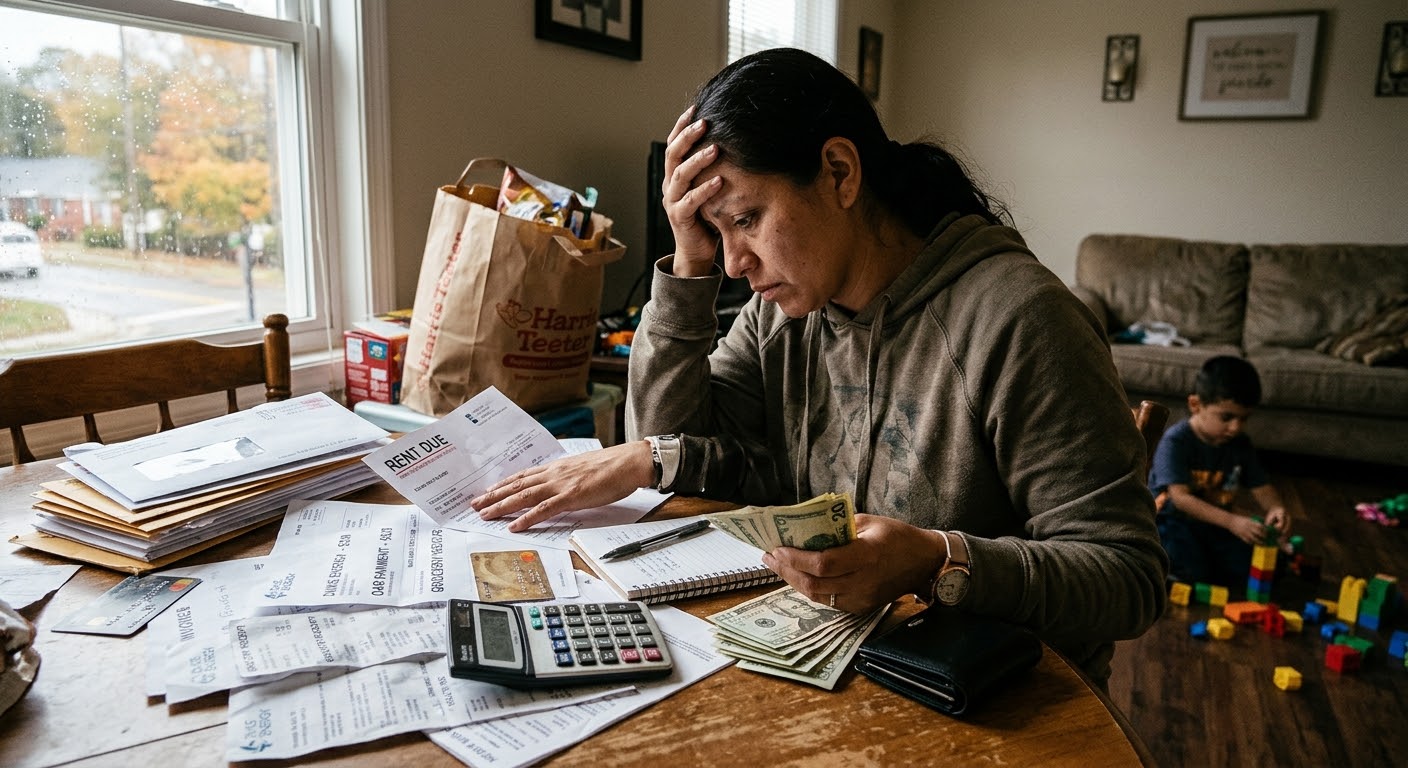
The modern American economy presents a striking paradox. Headline indicators, from corporate earnings to gross domestic product, regularly signal strength, yet a quiet, structural strain defines daily life for tens of millions of households.
Across the country, the baseline cost of maintaining a modest standard of living has outpaced standard wage growth, turning routine living expenses into a persistent source of financial tension.
This squeeze is not driven by frivolous spending, but stems directly from the rising cost of core necessities.
Housing represents the single largest contributor to household stress. Decades of underbuilding, combined with shifting demographic demand and elevated borrowing rates, have locked millions out of homeownership while driving rents to record highs. Median home prices remain disconnected from median household incomes. High mortgage rates reinforce a lock in effect, preventing existing owners from selling and further restricting available housing inventory. Simultaneously, a majority of renters now allocate well over the standard thirty percent threshold of their gross income toward housing, drastically reducing their margin for discretionary saving.
Beyond shelter, essential goods and services have experienced sustained price structural shifts. While overall inflation may fluctuate, the cumulative price increases on everyday food staples over recent years remain embedded in supermarket totals, consuming a disproportionate share of lower and middle income budgets.
Furthermore, premium increases, higher deductibles, and rising car and home insurance rates act as a continuous tax on household cash flow. Childcare costs present another severe burden, as in many states, the annual cost of infant or toddler care exceeds average college tuition, forcing parents, often mothers, to choose between working or staying home.
To compensate for the gap between take home pay and core expenses, households have increasingly drawn down savings and turned to revolving credit. High interest rates on credit cards and consumer loans transform short term reliance on debt into long term financial drag, leaving minimal room to build emergency funds, let alone save for retirement.
The modern affordability crisis is less about temporary market cycles and more about structural misalignment. Until the supply of critical needs, particularly housing, catches up with demand, the gap between economic metrics and lived economic reality will remain a central challenge for American families.
 English